
Concerns have deepened over alleged alterations to tax laws passed by the National Assembly, after two more lawmakers raised objections to the gazetted versions.
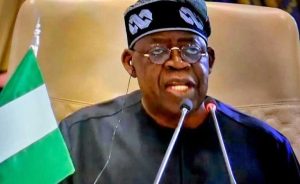
Daily Trust had reported how a member of the House of Representatives, Hon. Abdulsammad Dasuki (PDP Sokoto), on Wednesday, raised a matter of privilege on the floor of the House, alleging discrepancies between the tax laws passed by the National Assembly and the versions subsequently gazetted and made available to the public.
ad
Rising under Order Six, Rule Two of the House Rules on a Point of Privilege, Dasuki told the House that his legislative privilege had been breached, insisting that the content of the tax laws as gazetted did not reflect what lawmakers debated, voted on and passed on the floor of the House.
Speaking in a BBC Hausa’s Ra’ayi Riga programme, Hon. Muhammad Bello Fagge (representing Fagge Federal Constituency, Kano) and Hon. Yusuf Shitu Galambi (Gwaram Federal Constituency, Jigawa), also warned that the discrepancies could undermine constitutional order and further erode public trust in government.
ad
LG autonomy: Tinubu threatens governors with Executive Order
Survivors relive Maitatsine violence 45 years after
Hon. Fagge said the opposition had initially objected to the bills, a move that led to wider consultations across the country before their eventual passage.
“We in the opposition initially objected to the tax bills because of fears that certain provisions could be introduced without proper scrutiny. This led the Speaker of the House of Representatives, Tajudeen Abbas, to constitute a committee that went round the country, met with traditional rulers and governors, and asked them to submit their grievances and suggestions to the National Assembly. After that process, the bills were harmonised and approved,” he said.
Fagge said the controversy arose when the gazetted versions of the laws differed from what lawmakers approved.
“However, when the laws were later gazetted, what appeared was different from what we approved in Parliament. There were discrepancies, meaning that what was signed is not what we at the National Assembly passed,” he said.
ad
He cited the Nigeria Revenue Service Act, noting differences in Section 25 on accounts and audit, as well as Sections 26 and 30, adding that the Joint Revenue Board Act also contains discrepancies, particularly in Sections 9, 14, 30, 40 and 44.
“Even if it is just one part that is different from what we agreed, there is a problem,” he added.
It’s about saving Nigeria
The lawmaker warned that some provisions appear to have transferred powers from the legislature and the judiciary to the Executive, particularly to the Nigeria Revenue Service.
“There is no way the legislature will make a law without giving itself oversight functions. That is the essence of checks and balances. The issue goes beyond party politics. This is not about opposition politics. This is about saving Nigeria.”
ad
Lawmaker demands suspension of implementation
Also speaking in the programme, Hon. Galambi said public opposition to taxation is often driven by mistrust
over how government spends public funds.
Amaid concerns, the federal government had insisted that the new tax laws would enhance fiscal equity, protect taxpayers’ rights and ensure a level playing field for all.
Taiwo Oyedele, Chairman, Presidential Fiscal Policy and Tax Reforms Committee, also explained that contrary to the general perception that the government is introducing new taxes on the masses, many taxes have been repealed, reversed and suspended.
He listed the taxes to include 5% excise tax on airtime & data; Cybersecurity levy on money transfers; Carbon tax on single use plastics; Excise tax on imported vehicles; Import duties on food items, Agric and pharmaceuticals ; 4% import levy; FRCN charge on private companies and Expatriate employment levy.
In a recent presentation on the new tax laws, Oyedele expressed confidence that the new tax laws would stimulate growth without adding to inflation burden.
At the signing ceremony of the bills at the State House, President Tinubu said that the new taxes presented a new lease of life to every Nigerian and future generation.
Be the first to comment