
Tukur Buratai, former Chief of Army Staff, has said Nigeria is a great country that cannot be defined by its current challenges.
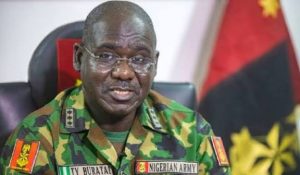
Owing to the rise in insecurity and killings in some parts of the country, Nigeria has come under attack.
Recently, US President Donald Trump described Nigeria as “disgraced nation”, the American leader had threatened to invade the country.
Critics have also accused the Federal Government of being incapable to tackle widespread crisis.
In a statement he personally signed, the former Army Chief said he was convinced that greatness lies ahead of the country.
“The narrative of Nigeria as a potential failed state is a profound misreading of its history, its character, and its undeniable destiny. While the 2011 CSAT report serves as a stark warning, it fundamentally underestimates the resilience, resourcefulness, and enduring spirit of the Nigerian nation and its people. Nigeria cannot and will not fail, by the grace of God. To suggest otherwise is to ignore the evidence of our past struggles, our present capacities, and our boundless future potential.”
“Nigeria’s journey began with giants who wrestled independence from colonial rule—leaders like Dr. Nnamdi Azikiwe (the philosophical force), Sir Ahmadu Bello (the visionary northern leader), and Chief Obafemi Awolowo (the development architect of the West). The First Republic, despite its challenges, launched ambitious development agendas in education, infrastructure, and industry, setting a template for national progress.
“Since 1960, Nigeria has been shaped by leaders of immense patriotism and complexity. From the military-era industrialization under Gen. Yakubu Gowon to the political engineering of Gen. Murtala Mohammed, and the democratic resilience of Chief Olusegun Obasanjo (who both handed over power in 1979 and stabilized it in 1999), Nigerian leaders have repeatedly steered the nation from the brink. Today, a new generation of patriotic leaders—in government, private sector, civil society, and technology—is rising. They are more connected, more accountable to a vibrant citizenry, and deeply committed to national unity. The idea that such a leadership corps would allow national collapse is inconceivable.
“Yes, Nigeria faces economic headwinds. However, to judge its future by its current challenges is shortsighted. Since independence, Nigeria has grown from an agrarian base to become Africa’s largest economy. Its GDP has multiplied, and sectors like telecommunications, entertainment (Nollywood), and fintech have achieved global acclaim without reliance on oil.
“To the West and international partners: The narrative of failure is not only unhelpful, it is blinding. The world does not need more contingency plans for Nigeria’s collapse; it needs robust partnership plans for Nigeria’s inevitable rise. Global resources are for sharing and mutual development, not for hoarding amidst speculative fear.
“In the final analysis, Nigeria’s destiny is in the hands of Nigerians — a people blessed by God with abundant resources and an indomitable spirit. The world is advised to see Nigeria not as a potential problem to be managed but as a formidable partner and a rising global power in the making. We will not fail. We are rising.”
Buratai: Judging Nigeria’s future by current challenges is shortsightedness
Be the first to comment