
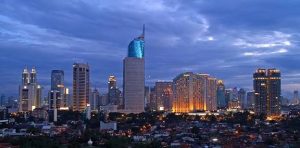
Jakarta has become the world’s most populous city, according to the World Urbanization Prospects 2025 released by the United Nations Department of Economic and Social Affairs (UN DESA).
Using an updated and harmonized method for defining urban areas, the report estimates Jakarta’s population at nearly 42 million, placing it ahead of Dhaka, which is about 40 million, and Tokyo, 33 million. The revised ranking illustrates how updated measurement criteria and continued demographic growth are reshaping understandings of urban scale in Asia and globally.
The 2025 edition introduces the Degree of Urbanization, a geospatial approach that applies consistent population and density thresholds to classify cities, towns, and rural areas. This method replaces earlier versions of the report that relied on country-specific definitions, which varied widely.
UN DESA notes that the updated criteria produce a more comparable representation of urban areas across regions. Under this method, Tokyo remains one of the world’s largest metropolitan regions but has shown a slight population decrease, while Jakarta’s continuous urban area captures a broader and more densely populated extent than previously reported.
The report finds that cities are now home to 45% of the world’s 8.2 billion people, up from 20% in 1950. The number of urban residents has more than doubled since mid-century, and projections indicate that by 2050, two-thirds of global population growth will occur in cities.
The number of megacities, urban areas with at least 10 million inhabitants, has reached 33 in 2025, more than half of which are located in Asia. By 2050, this number is expected to rise to 37, with Addis Ababa, Dar es Salaam, Hajipur, and Kuala Lumpur among those projected to exceed 10 million residents.
At the same time, the report highlights that small and medium-sized cities continue to accommodate most of the world’s urban population and are experiencing the fastest growth, particularly in Africa and Asia. Of the more than 12,000 cities examined, 96% have fewer than one million inhabitants, and the total number of cities worldwide has more than doubled since 1975.
Jakarta’s position in the updated ranking reflects ongoing demographic pressures and long-standing infrastructural challenges. The region faces issues related to density, air quality, mobility, and land subsidence, with nearly 40% of the city located below sea level due to groundwater extraction, urban expansion, and rising sea levels. These conditions have informed national discussions on long-term planning and contributed to Indonesia’s decision to relocate its administrative capital.
In 2019, the Indonesian parliament approved legislation to move the capital to Nusantara, a planned city on the island of Borneo located about 1,300 kilometers from Jakarta. The initiative aims to address structural constraints in the current capital and create a new administrative center designed with climate adaptation and renewable energy in mind.
Early planning for Nusantara outlines elevated buildings and pedestrian-oriented layouts shaped by local terrain and environmental conditions, along with expanded public transportation. While the project has encountered delays and has been the subject of environmental and logistical scrutiny, it represents one of the most extensive applications of “managed retreat,” a strategy involving the planned relocation of populations away from areas facing long-term environmental risks.
https://www.archdaily.com/1036544/jakarta-becomes-the-worlds-most-populous-city-according-to-new-un-data#:~:text=Jakarta%20has%20become%20the%20world’s,Social%20Affairs%20(UN%20DESA).
https://www.youtube.com/watch?v=62_UtYoyWo4?si=tWZxQ6XpqBRVjeOk
Be the first to comment